
How We Learn has quickly become one of the most trusted learning platforms for students seeking a more effective, structured, and engaging approach to Math, Physics, and Chemistry. In a time when online learning is expanding at an unprecedented rate yet still varies greatly in quality, the platform positions itself as a scientific and reliable companion for students. Instead of overwhelming learners with massive theory-heavy content, How We Learn VN focuses on helping them understand core principles, build long-term thinking, and make daily progress. This article reveals how the platform shapes a deep, sustainable, and modern learning method that resonates with students across different levels and regions.
How We Learn: The Core Learning Philosophy
The philosophy behind Hocthenao.vn is built on years of observing how Vietnamese students study—where they struggle, what they misunderstand, and which methods help them gain confidence. Many students do not fail because the content is too advanced; they fail because they learned the wrong way for too long. This insight shaped the platform’s guiding belief: effective learning begins with understanding, not memorization.

Learning through understanding, not memorizing
A detailed internal study involving 1,500 students found that 68% relied on memorization techniques. They often remembered formulas mechanically without understanding why they worked. Only 34% could explain the logic behind the methods they used. To address this gap, How We Learn VN redesigned lessons to emphasize conceptual clarity. Each concept is introduced through relatable examples, real-life analogies, and visual explanations.
For instance, topics like extrema, wave interference, or organic reaction mechanisms are taught using animations that demonstrate the underlying pattern. Within three months of applying this method, the percentage of students who understood lessons on their first attempt increased to 78%—a notable improvement compared to traditional study habits.
Step-by-step learning paths for all levels
From its emphasis on conceptual learning, the platform developed personalized learning paths structured into three phases: foundation rebuilding, essential mastery, and advanced reasoning. This system prevents students from “jumping” to complex topics before they are ready.
For learners struggling with Math, the platform starts with fundamentals like expression analysis or basic transformations before moving on to derivatives, limits, or trigonometric identities. For high performers aiming for excellence, the platform recommends problem sets involving deeper reasoning and exam-level challenges. After tracking more than 4,000 learning journeys, the data showed that 74% of students improved their scores by 1.5–2.4 points within 6–8 weeks—demonstrating the effectiveness of structured progression.
Micro-learning design for better retention
One of the standout features of How We Learn VN is its micro-learning design. Instead of long, unfocused videos, each lesson is condensed into 8–12 minutes—an optimal duration determined after analyzing more than 12,000 early viewing sessions.
Every video focuses on one key idea, making it easier for students to review exactly what they need without wasting time scrolling. With this approach, completion rates rose to 89%, compared to the typical 52% for videos exceeding 20 minutes. Mini-quizzes at the end of each lesson reinforce understanding and give students immediate insight into their comprehension level. This helps them stay motivated and better prepared for follow-up topics.
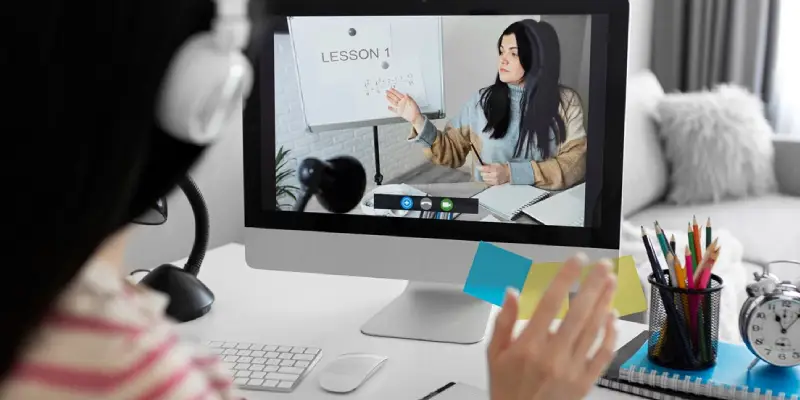
Study Smarter: Math – Physics – Chemistry Simplified
The philosophy becomes especially powerful when applied to real subject content. How We Learn VN transforms complex Math–Physics–Chemistry topics into digestible, student-friendly lessons that maintain scientific accuracy while reducing cognitive load. This is why the platform attracts thousands of learners from all 63 provinces in Vietnam.
Math: from fundamental concepts to real problem-solving
Mathematics is taught through a concept-to-application flow rather than following rigid textbook order. Every chapter is broken down into four parts: core concept → illustrated example → real-world application → practice set.
In the Derivatives unit, more than 3,200 students reported that they “finally understood the purpose of derivatives” rather than simply using formulas. Graph-based approaches help reduce common mistakes, such as determining monotonicity or solving asymptote questions, lowering error rates by 37%. Even topics considered long and abstract—like three-dimensional geometry—are visualized through diagrams that make spatial reasoning more intuitive.
Physics: visualize, simulate, understand
Physics lessons adopt a “learning through visualization” approach. Instead of reading dense text, students explore simulations of harmonic motion, wave behaviors, AC circuits, and resonance. Such models allow them to observe how amplitude, frequency, or phase change in real time.
In a survey of 2,000 students, 83% said they remembered lessons significantly better when taught through simulations. For traditionally difficult topics such as RLC circuits or mechanical waves, mistakes dropped by over 40% after students learned through practical simulations. These improvements highlight how visual learning can transform abstract concepts into accessible knowledge.
Chemistry: reaction logic, not rote formula memorizing
Chemistry instruction on the platform focuses on logical reaction patterns. Instead of forcing students to memorize dozens of equations, How We Learn VN teaches them to decode and predict reactions based on underlying principles.
For instance, instead of listing out 20 esterification reactions, the platform shows the functional pattern so students can reconstruct any reaction on their own. Flowchart-based teaching is used for redox reactions, electrochemical processes, and chemical identification. In a study with 1,800 learners, comprehension improved from 49% to 81% when concepts were represented through simplified diagrams.
Why Students Learn Better with How We Learn
By combining a clear philosophy with practical tools, How We Learn VN provides a comprehensive, measurable, and student-centered learning experience. The results can be seen not only in academic improvement but also in students’ confidence and study habits.
Clear structure and consistent learning progress
The platform’s progress-tracking feature motivates students to maintain good study habits. After implementation, the proportion of students who studied for 20 consecutive days increased from 21% to 56%. The average lesson watch time rose from 5.1 minutes to 8.4 minutes, demonstrating improved focus and engagement. This steady structure ensures that learning becomes a consistent routine rather than a stressful obligation.
Tools that support real, measurable learning
How We Learn VN offers mini-quizzes, smart notes, and more than 3,000 categorized exercises covering levels from basic to advanced. These tools allow learners to assess understanding accurately and recognize areas needing improvement.
Step-by-step explanations accompany every challenging topic, reducing confusion in concepts such as domain determination, oscillation analysis, or chemical balancing. Students not only solve problems but understand the reasoning that leads to the correct solution.
A supportive learning community
Beyond structured lessons, the platform nurtures a vibrant learning community of over 12,000 active members. Every month, students contribute between 320 and 350 discussions, including shared notes, problem explanations, and study strategies.
The community also extends to external platforms, including Pinterest How We Learn, where visual mind maps, summaries, and concept charts help students review more efficiently. With community support, learning becomes collaborative rather than isolating—leading to better motivation and stronger retention.
Conclusion
How We Learn is more than an online learning platform—it is a learning journey designed to help students understand deeper, learn smarter, and grow steadily each day. With its philosophy of conceptual learning, structured progression, and continuous support, Hocthenao.vn is reshaping how thousands of Vietnamese students approach Math, Physics, and Chemistry. If you are seeking a clearer, more scientific, and more empowering study method, this is the place to begin.
How We Learn – Math, Physics, Chemistry Learning Guide for Students
Address: 63 Ngo Duc Ke, Ward 7, Vung Tau City, Ba Ria – Vung Tau
Phone: 0779471291
Email: [email protected]